inquiry
zostaw wiadomość
Jeśli jesteś zainteresowany naszymi produktami i chcesz poznać więcej szczegółów, zostaw wiadomość tutaj, a my odpowiemy tak szybko, jak to możliwe.
składać
Bengbu Longkai Welding Protection Technology Co.,Ltd.
Dom

maska ​​oddechowa papr

maska ​​oddechowa papr

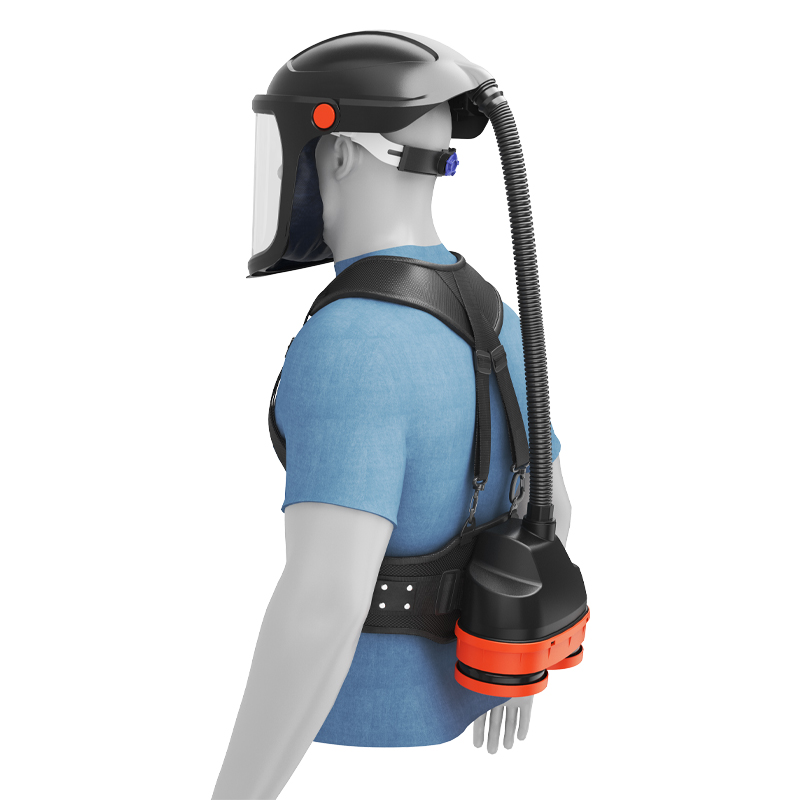
  • Demolition Work: Choosing the Right PAPR
    Demolition Work: Choosing the Right PAPR
    Jan 20, 2026
      Demolition work involves complex and variable environments. From breaking down walls of old buildings to dismantling industrial facilities, pollutants such as dust, harmful gases, and volatile organic compounds (VOCs) are pervasive, placing extremely high demands on respiratory protection for workers. battery powered respirator have become core protective equipment in demolition work due to their advantages of positive pressure protection and low breathing load. However, not all PAPRs are suitable for all scenarios; selecting the right type is essential to build a solid line of defense for respiratory safety. Compared with traditional negative-pressure respirators, PAPRs actively deliver air through an electric fan, which not only reduces breathing fatigue during high-intensity operations but also prevents pollutant leakage through the positive pressure environment inside the mask, significantly improving protection reliability.   For general dust-generating demolition operations, particulate-filtering PAPRs are preferred. Such operations commonly involve the demolition of concrete, masonry, wood, and other components, with respirable dust—especially PM2.5 fine particles—as the primary pollutant. Long-term inhalation can easily induce pneumoconiosis. When selecting a model, high-efficiency particulate filters should be used, and the mask can be chosen based on operational flexibility needs. For open-air scenarios such as ordinary wall breaking and floor demolition, air-fed hood-type PAPRs are more suitable. They do not require a facial fit test, offer strong adaptability, and can also provide head impact protection. For narrow workspaces with extremely high dust concentrations, it is recommended to use tight-fitting full-face PAPRs, which have a minimum air flow rate of no less than 95L/min, forming a tight seal on the face to prevent dust from seeping through gaps.   For demolition operations involving harmful gases, combined-filtering PAPRs are required. During the demolition of old buildings, volatile organic compounds such as formaldehyde and benzene are emitted from paints and coatings, while the dismantling of industrial facilities may leave toxic gases such as ammonia and chlorine. In such cases, a single particulate-filtering PAPR cannot meet protection needs. Dual-filter elements (particulate + gas/vapor) should be used, with precise selection based on pollutant types: activated carbon filter cartridges for organic vapors, and chemical adsorption filter elements for acid gases. For these scenarios, positive-pressure tight-fitting PAPRs are preferred. Combined with forced air supply, they not only effectively filter harmful gases but also reduce pollutant residue inside the mask through continuous air supply, while avoiding poisoning risks caused by mask leakage.   Special scenarios require targeted selection of dedicated loose fitting powered air purifying respirators. Demolishing asbestos-containing components is a high-risk operation—once inhaled, asbestos fibers cause irreversible lung damage. PAPRs complying with asbestos protection standards should be used, paired with high-efficiency HEPA filters. Additionally, hood-type designs must be adopted to avoid fiber leakage due to improper wearing of tight-fitting masks. Meanwhile, the hood should be used with chemical protective clothing to form full-body protection. For demolition in confined spaces such as basements and pipe shafts, oxygen levels must first be tested. If the oxygen concentration is not less than 19% (non-IDLH environment), portable positive-pressure PAPRs can be used with forced ventilation systems. If there is a risk of oxygen deficiency, supplied-air respirators must be used instead of relying on PAPRs.   PAPR selection must balance compliance with standards and operational practicality.  Adjustments should also be made based on labor intensity: most demolition work is moderate to high intensity, so Powered Air Purifying Respirator TH3 are more effective in reducing breathing load, preventing workers from removing protective equipment due to fatigue. Battery life must match operation duration—for long-term outdoor operations, replaceable battery models are recommended to ensure uninterrupted protection. Furthermore, filter elements must be replaced strictly on schedule: gas filter cartridges should be replaced within 6 months of opening, or immediately if odors occur or resistance increases, to avoid protection failure.   Finally, it should be noted that PAPRs are not universal protective equipment, and their use must be based on a comprehensive risk assessment. Before demolition work, on-site testing should be conducted to identify pollutant types, concentrations, and environmental characteristics, followed by selecting the appropriate PAPR type for the scenario.  Only by selecting and using PAPRs correctly can we build a reliable barrier for respiratory health in complex demolition work, balancing operational efficiency and safety protection.If you want know more, please click www.newairsafety.com.
    CZYTAJ WIĘCEJ
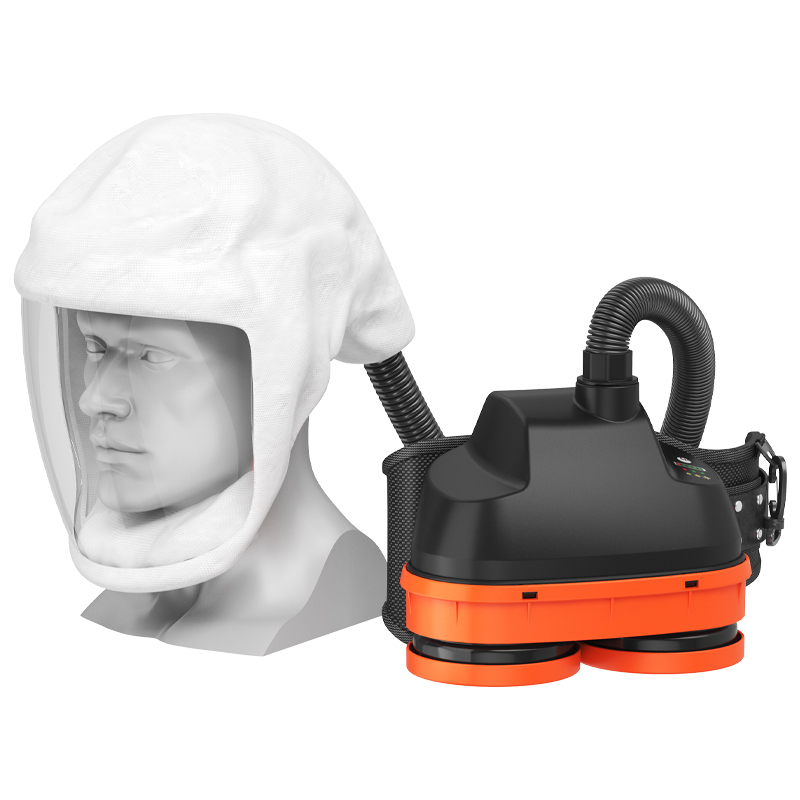
  • PAPR Air Inlet Modes: Practical Differences & Selection Logic
    PAPR Air Inlet Modes: Practical Differences & Selection Logic
    Jan 16, 2026
      In air purification respirator application scenarios, most users focus more on filtration efficiency and protection level, but often overlook the potential impact of air inlet modes on actual operations. this article focuses on the differences of front, side and back air inlet modes in wearing adaptability, scenario compatibility, energy consumption control and special population adaptation from the perspective of on-site operational needs. The choice of air inlet mode is not only related to protection effect but also directly affects operational continuity, equipment loss rate and employees' acceptance of the equipment. Its importance becomes more prominent especially in scenarios with multiple working condition switches and long-term operations.   The core competitiveness of front air inlet PAPR lies in lightweight adaptation and emergency scenario compatibility, rather than simple air flow efficiency. This design concentrates the core air inlet and filter components in front of the head, with the overall equipment weight more concentrated and the center of gravity forward, adapting to most standard head shapes without additional adjustment of back or waist load, being more friendly to workers who are thin or have old back injuries. In emergency rescue, temporary inspection and other scenarios, the front air inlet PAPR has significant advantages in quick wearing; without cumbersome hose connection, it can be worn immediately after unpacking, gaining time for emergency disposal. However, potential shortcomings cannot be ignored: the forward center of gravity may cause neck soreness after long-term wearing, especially when used with safety helmets, the head load pressure is concentrated, making it unsuitable for continuous operations of more than 8 hours; at the same time, the front air inlet is easily blown back by breathing air flow, leading to moisture condensation on the surface of the filter unit, which is prone to mold growth in high-humidity environments, affecting filter service life and respiratory health.   The core advantage of side air inlet PAPR is multi-equipment coordination adaptability and air flow comfort, which is the key to its being the first choice for comprehensive working conditions. In industrial scenarios, workers often need to match safety helmets, goggles, communication equipment and other equipment. The arrangement of the side air inlet unit can avoid the equipment space in front of and on the top of the head, prevent mutual interference, and not affect the wearing stability of the safety helmet. Compared with the direct air flow of the front air inlet, the side air inlet can achieve "face-surrounding air supply" through a flow guide structure, with softer air flow speed, avoiding dryness caused by direct air flow to the nasal cavity and eyes, and greatly improving tolerance for long-term operations. Its limitations are mainly reflected in bilateral adaptability: single-side air inlet may lead to uneven head force, while double-side air inlet will increase equipment volume, which may collide with shoulder protective equipment and operating tools; in addition, the flow guide channel of the side air inlet unit is narrow; if the filtration precision of the filter unit is insufficient, impurities are likely to accumulate at the flow guide port, affecting air flow smoothness.   The core value of back air inlet papr air purifier lies in extreme working condition adaptation and equipment loss control, especially suitable for high-frequency and high-intensity operation scenarios. Integrating core components such as air inlet, power and battery into the back, only a lightweight hood and air supply hose are retained on the head, which not only completely frees up the head operation space but also avoids collision and wear of core components during operation, significantly reducing equipment maintenance and replacement costs. The weight of the back component is evenly distributed; matched with adjustable waist belt and shoulder straps, it can disperse the load to the whole body. Compared with front and side air inlets, it is more suitable for long-term and high-intensity operations. Moreover, the long back air flow path can be equipped with a simple heat dissipation structure to alleviate equipment overheating in high-temperature environments. However, this mode has certain requirements for the working environment: the back component is relatively large, unsuitable for narrow spaces, climbing operations and other scenarios; as the core connection part, if the hose material has insufficient toughness, it is prone to bending and aging during large limb movements, and dust is easy to accumulate on the inner wall of the hose, making daily cleaning more difficult than front and side air inlet equipment.   The core logic of selection is the adaptive unity of "human-machine-environment", rather than the optimal single performance. If the operation is mainly temporary inspection and emergency disposal with high personnel mobility, front air inlet PAPR should be preferred to balance wearing efficiency and lightweight needs; for regular industrial operations requiring multiple protective equipment and long operation time, side air inlet is the choice balancing comfort and coordination; for high-frequency, high-intensity operations with strict requirements on equipment loss control, back air inlet is more cost-effective. In addition, special factors should be considered: front air inlet should be avoided in high-humidity environments to prevent moisture condensation; back air inlet should be excluded in narrow space operations, and lightweight front or side air inlet should be preferred; for scenarios with high communication needs, side air inlet is easier to coordinate with communication equipment.   The iterative design of papr respirator air inlet modes is essentially the in-depth adaptation to operational scenario needs. From the initial front air inlet to meet basic protection, to the side air inlet balancing comfort and coordination, and then to the back air inlet adapting to extreme working conditions, each mode has its irreplaceable value. For enterprises, selection should not only focus on equipment parameters but also combine feedback from front-line workers and detailed differences of operation scenarios, so that PAPR can become an assistant to improve operational efficiency rather than a burden while ensuring safety. In the future, with the popularization of modular design, switchable air inlet modes may become mainstream, further breaking the scenario limitations of a single air inlet mode.If you want know more, please click www.newairsafety.com.
    CZYTAJ WIĘCEJ
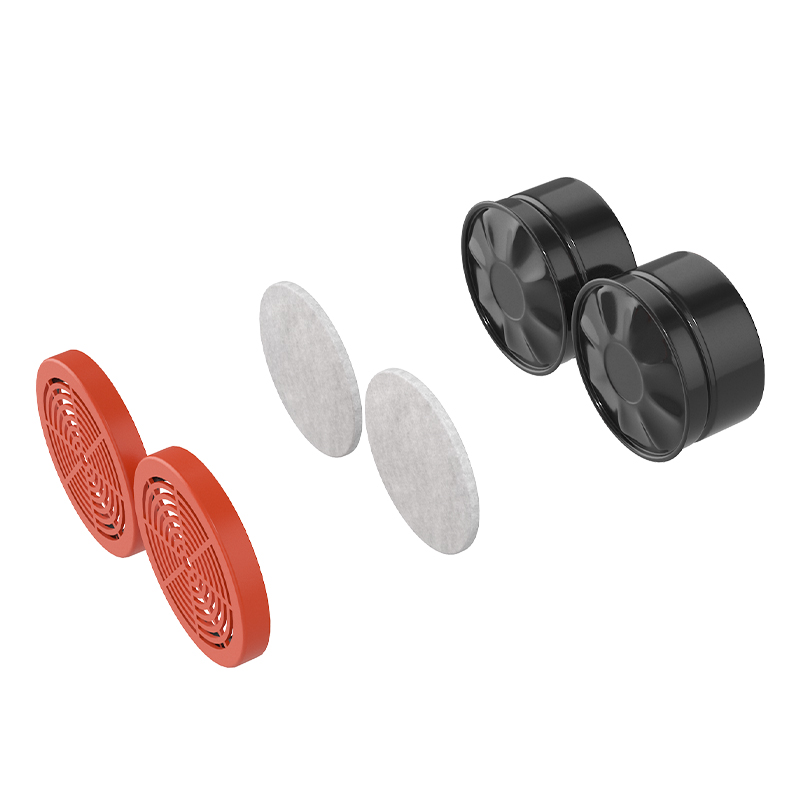
  • Kluczowe elementy pojemników na maski gazowe: „Formuły celowane” dopasowane do „Typów gazów ochronnych”
    Kluczowe elementy pojemników na maski gazowe: „Formuły celowane” dopasowane do „Typów gazów ochronnych”
    Aug 26, 2025
    Główne komponenty pojemników do masek gazowych różnią się znacząco w zależności od celu ochrony (seria A/B/E/K). Zasadniczo „konkretne komponenty są używane do określenia właściwości chemicznych poszczególnych gazów” – precyzja ta jest kluczowa, gdy te pojemniki są łączone z… Respiratory oczyszczające powietrze zasilane, który nie może zrekompensować niedopasowanych lub nieskutecznych materiałów filtracyjnych. Poniżej znajduje się wyjaśnienie odnoszące się do wspomnianej wcześniej klasyfikacji rodzajów gazów, ze szczególnym uwzględnieniem znaczenia PAPR:​1. W przypadku serii A (gazy/opary organiczne, np. benzen, benzyna): rdzeń stanowi węgiel aktywowany​Główny składnik: Węgiel aktywny o dużej powierzchni właściwej (głównie węgiel z łupin orzechów kokosowych lub węgiel na bazie węgla, o porowatości ponad 90%. Powierzchnia 1 grama węgla aktywnego odpowiada powierzchni boiska piłkarskiego).​Zasada działania: Wykorzystuje „fizyczną adsorpcję” węgla aktywnego – cząsteczki gazu organicznego są adsorbowane w mikroporach węgla aktywnego pod wpływem „sił van der Waalsa” i nie mogą przedostać się do strefy oddychania wraz z przepływem powietrza. Dzięki temu idealnie nadaje się do stosowania w respiratory oczyszczające powietrze zasilane PAP stosowane przy pracach malarskich lub związanych z obsługą rozpuszczalników, gdzie ciągła ekspozycja na opary organiczne wymaga niezawodnej, długotrwałej adsorpcji.​Ulepszona optymalizacja: W przypadku gazów organicznych o niskiej temperaturze wrzenia z serii A3 (np. metanu, propanu, które są niezwykle lotne) w celu zwiększenia zdolności adsorpcji gazów organicznych o małych cząsteczkach, co ma kluczowe znaczenie, stosuje się „węgiel aktywowany impregnowany” (z dodatkiem niewielkich ilości substancji, takich jak silikon). respirator oczyszczający powietrze pod ciśnieniem dodatnim stosowane w rafineriach ropy naftowej lub zakładach przetwórstwa gazu ziemnego.​ 2. W przypadku serii B (gazy/opary nieorganiczne, np. chlor, dwutlenek siarki): głównym składnikiem są adsorbenty chemiczne​Główny składnik: Nasączony węgiel aktywny + tlenki metali (np. siarczan miedzi, nadmanganian potasu, wodorotlenek wapnia).​Zasada działania: Większość gazów nieorganicznych ma silne właściwości utleniające lub drażniące i musi zostać przekształcona w nieszkodliwe substancje poprzez „reakcje chemiczne”. Na przykład:Chlor (Cl₂) reaguje z wodorotlenkiem wapnia, tworząc chlorek wapnia (nieszkodliwą substancję stałą);​Dwutlenek siarki (SO₂) utlenia się do siarczanu (wiążącego się w materiale filtracyjnym po rozpuszczeniu w wodzie) poprzez reakcję z nadmanganianem potasu.​Taka stabilność chemiczna jest koniecznością w przypadku respiratorów oczyszczających powietrze, stosowanych w zakładach chemicznych, gdzie nagłe skoki stężeń gazów nieorganicznych wymagają szybkiej i skutecznej neutralizacji.​3. W przypadku serii E (gazów/par kwaśnych, np. kwasu solnego, fluorowodoru): neutralizatory alkaliczne​Główny składnik: wodorotlenek potasu (KOH), wodorotlenek sodu (NaOH) lub węglan sodu (na nośniku z węgla aktywnego lub obojętnych nośników).​Zasada działania: Wykorzystuje „reakcję neutralizacji kwasowo-zasadowej” do przekształcania kwaśnych gazów w sole (nieszkodliwe i nielotne). Na przykład:Kwas solny (HCl) reaguje z wodorotlenkiem potasu, tworząc chlorek potasu (KCl) i wodę;​Fluorowodór (HF) reaguje z wodorotlenkiem sodu, tworząc fluorek sodu (NaF, substancja stała), co zapobiega jego korozji w drogach oddechowych.Ta odporna na korozję formuła jest niezbędna w przypadku respiratorów oczyszczających powietrze stosowanych w warsztatach 酸洗 (trawienia) lub w zakładach produkcji półprzewodników, gdzie kwaśne opary stanowią zagrożenie zarówno dla zdrowia, jak i dla sprzętu.​4. W przypadku serii K (amoniak i gazy/opary amin, np. amoniak, metyloamina): Adsorbenty kwaśne​Główny składnik: węgiel aktywny impregnowany kwasem fosforowym (H₃PO₄) lub siarczanem wapnia.​Zasada działania: Amoniak i aminy są gazami alkalicznymi i są wiązane poprzez „neutralizowanie kwasowo-zasadowe”. Na przykład:Amoniak (NH₃) reaguje z kwasem fosforowym tworząc fosforan amonu ((NH₄)₃PO₄, substancja stała);​Metyloamina (CH₃NH₂) reaguje z siarczanem wapnia, tworząc stabilne sole, które nie ulatniają się.Celowa neutralizacja jest kluczowa w przypadku respiratorów oczyszczających powietrze stosowanych w zakładach nawozowych lub chłodniach, gdzie wycieki amoniaku stanowią częste zagrożenie.​III. „Logika dopasowania” między konstrukcją a komponentami: Dlaczego nie można mieszać pojemników na maski gazowe?​Z powyższej treści wynika, że ​​„warstwowa struktura” i „dobór komponentów” pojemników na maski gazowe są w całości zaprojektowane wokół „celu ochrony” — zasada ta jest jeszcze ważniejsza w połączeniu z zasilanymi respiratorami oczyszczającymi powietrze, ponieważ urządzenia te zwiększają zarówno skuteczność prawidłowych pojemników, jak i ryzyko związane z nieprawidłowymi:​Jeżeli do ochrony przed kwaśnymi gazami serii E z respiratorami oczyszczającymi powietrze z zasilaniem stosuje się pojemnik z maską gazową serii A (z węglem aktywnym), kwaśne gazy będą bezpośrednio przenikać przez węgiel aktywny (nie wystąpi reakcja neutralizacji), a ciągły przepływ powietrza przez PAPR dostarczy te niefiltrowane gazy bezpośrednio do użytkownika;​Jeżeli pojemnik maski gazowej serii K (z pochłaniaczem kwasów) zostanie wystawiony na działanie chloru serii B (silnie utleniającego) w respiratorach z zasilanym powietrzem, mogą wystąpić niepożądane reakcje, a nawet mogą zostać wytworzone substancje toksyczne, które następnie respirator PAPR będzie rozprowadzał w strefie oddychania.Nawiązuje to również do wspomnianej wcześniej „złotej zasady doboru” — pojemniki z maskami gazowymi z odpowiedniej serii muszą być dobierane w zależności od rodzaju gazu występującego w środowisku pracy, aby mieć pewność, że konstrukcja i podzespoły faktycznie spełniają swoją rolę, zwłaszcza w połączeniu z zasilanymi respiratorami oczyszczającymi powietrze.​Wniosek​Pojemnik na maskę gazową nie jest „pojemnikiem jednomateriałowym”, lecz wyrafinowaną kombinacją „struktury warstwowej + ukierunkowanych komponentów” – zaprojektowaną tak, aby harmonijnie współpracować z respiratorami z aktywnym oczyszczaniem powietrza. Zewnętrzna powłoka zapewnia szczelność przepływu powietrza przez respirator PAPR, warstwa wstępnego przetwarzania filtruje zanieczyszczenia, aby utrzymać wydajność respiratora PAPR, a rdzeń warstwy adsorpcyjno-neutralizacyjnej precyzyjnie reguluje przepływ określonych gazów, utrzymując czyste powietrze dostarczane przez respirator PAPR. Ostatecznie osiąga ona efekt ochronny „zapobiegając przedostawaniu się szkodliwych gazów i umożliwiając wylot czystego powietrza”. Zrozumienie tych szczegółów nie tylko pomaga nam w bardziej naukowym doborze pojemników do masek gazowych w przypadku standardowych masek, ale jest jeszcze ważniejsze dla użytkowników zasilanych respiratorów powietrza (PAPR), którzy polegają na synergii pojemnika i respiratora PAPR dla zapewnienia stałej i niezawodnej ochrony. Pozwala nam to również na dokładniejszą ocenę „kiedy wymienić pojemnik” podczas użytkowania (np. skuteczność ochrony gwałtownie spadnie po nasyceniu rdzeniowej warstwy adsorpcyjnej), tworząc „linię obrony” dla bezpieczeństwa układu oddechowego – szczególnie dla osób korzystających z zasilanych respiratorów powietrza w środowiskach wysokiego ryzyka. Aby dowiedzieć się więcej, kliknij www.newairsafety.com.
    CZYTAJ WIĘCEJ

zostaw wiadomość

zostaw wiadomość
Jeśli jesteś zainteresowany naszymi produktami i chcesz poznać więcej szczegółów, zostaw wiadomość tutaj, a my odpowiemy tak szybko, jak to możliwe.
składać
KONTAKT: sales@txhyfh.com

Dom

Produkty

WhatsApp

Skontaktuj się z nami